
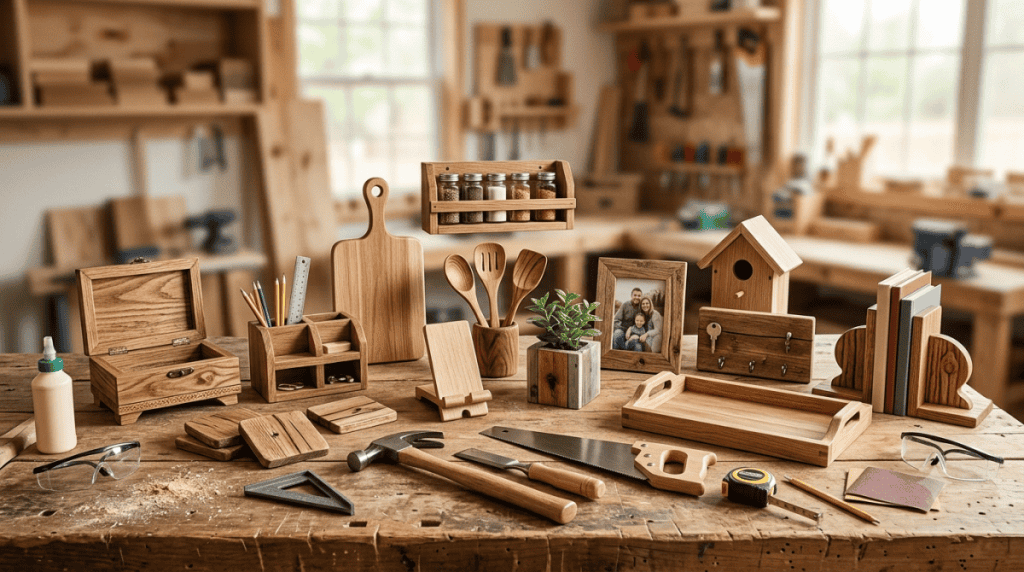
Woodworking stands as one of humanity’s oldest and most rewarding crafts. From the earliest civilizations shaping tools and shelter from timber to today’s hobbyists finding solace in their garages and workshops, working with wood connects us to something fundamental. In our increasingly digital, fast-paced world, the act of transforming a rough board into a functional, beautiful object offers a unique form of meditation and satisfaction.
For many, the prospect of starting woodworking can seem intimidating. The images that come to mind might involve massive industrial machinery, complex joinery, and years of apprenticeship. However, this perception couldn’t be further from the truth. The reality is that there exists a vast world of easy woodworking projects perfectly suited for beginners, weekend warriors, and anyone looking to dip their toes into this fulfilling craft.
In this comprehensive guide I will explore the spectrum of accessible woodworking projects, from simple home accessories to practical furniture pieces. I’ll cover essential tools, fundamental techniques, safety considerations, and provide detailed project ideas that anyone can accomplish with basic equipment and a bit of patience. Whether you’re looking to furnish your home on a budget, create personalized gifts, or simply discover a new hobby.

Quick Navigation Menu
Getting Started with Woodworking: The Beginner’s Mindset
Essential Tools for Easy Woodworking Projects
The Best Wood Types for Beginner Woodworking Projects
Project Category 1: Simple Home Accessories
Project Category 2: Furniture for Small Spaces
Project Category 3: Practical Workshop Aids
Project Category 4: Gifts and Heirlooms
Finishing Woodworking Techniques for Beginners
Advanced Woodworking Techniques Without Advanced Difficulty
5 Common Woodworking Mistakes and How to Avoid Them
Sourcing Woodworking Materials Sustainably
The Path Forward: Growing Your Woodworking Skills
Conclusion: The Joy of Making Easy Woodworking Projects
Getting Started with Woodworking: The Beginner’s Mindset
Before we dive into specific projects, it’s crucial to establish the right mindset. Woodworking is as much about the journey as the destination. The most successful woodworkers share certain attitudes:
Patience cannot be overstated. Wood is an organic material that responds to its environment and to the tools we use. Rushing through cuts or assembly leads to frustration and subpar results. Embrace the process, celebrate small victories, and understand that mistakes are not failures but learning opportunities.
Safety should always be your primary concern. Woodworking involves sharp tools and powerful machinery, but with proper precautions, it remains a remarkably safe hobby. We’ll discuss safety in detail later, but for now, commit to treating every tool with respect.

Begin with the end in mind by choosing projects that genuinely excite you. The best motivation comes from creating something you’ll use and treasure. Your first projects don’t need to be masterpieces; they need to be completed. Each finished piece builds confidence and skill.
Essential Tools for Easy Woodworking Projects
The Power Tool Starter Kit
- Circular Saw – This versatile tool handles straight cuts in plywood and dimensional lumber. It’s portable, affordable, and can perform most cutting tasks needed for beginner projects.
- Cordless Drill/Driver – Indispensable for drilling holes and driving screws. A 12-volt or 18-volt model with a clutch will serve you well for years.
- Random Orbital Sander – Sanding is the secret to professional-looking results. This tool makes the job quick and produces excellent finishes.
- Jigsaw – Perfect for curved cuts and intricate shapes, adding creative possibilities to your projects.
- Cordless Power Tool kits. Check them out on Amazon.
The Hand Tool Essentials
- Measuring Tape – A 25-foot tape with clear markings is non-negotiable.
- Combination Square – Essential for marking 90-degree angles and checking squareness.
- Hammer – A 16-ounce claw hammer handles most nailing tasks.
- Screwdrivers – Both Phillips and flathead in various sizes.
- Utility Knife – For scoring, marking, and general cutting tasks.
- Clamps – You can never have too many clamps. Start with four 6-inch and four 12-inch bar clamps.
- Woodworking Basic Tool Kits. Check them out on Amazon.
Optional but Recommended
- Miter Saw – Makes crosscuts and angle cuts much easier and more accurate.
- Table Saw – The centerpiece of many workshops, but not necessary for beginners.
- Router – Adds decorative edges and can create professional joinery.
Safety First: Protecting Yourself
Woodworking safety is common sense, but it requires conscious effort:
Eye Protection – Safety glasses or goggles must be worn whenever operating power tools or hammering. Wood chips and sawdust are constant hazards.
Hearing Protection – Extended exposure to power tool noise damages hearing. Ear muffs or plugs are essential for any power tool use.
Dust Protection – Wood dust is a respiratory irritant and can cause allergic reactions. An N95 mask or dust respirator should be worn during sanding and cutting.

Proper Clothing – Avoid loose clothing, jewelry, or dangling sleeves that could catch in tools. Closed-toe shoes protect your feet from dropped lumber and tools.
Workshop Environment – Maintain good lighting, keep your workspace clean and organized, and never operate tools when fatigued or under the influence of any substance.
Check out Amazons full line of Safety gear for Woodworkers Here.
The Best Wood Types for Beginner Woodworking Projects
The choice of wood dramatically affects the difficulty and success of your projects. For easy woodworking projects, select materials that are forgiving to work with:
Pine – Soft, inexpensive, and readily available. Pine is forgiving of mistakes and takes paint well. Its only drawback is susceptibility to dents and scratches.
Poplar – A step up from pine, this hardwood is still budget-friendly and easy to work. It accepts stain more evenly than pine and has a pleasant, subtle grain.
Birch Plywood – Strong, stable, and with a nice surface. Good-quality plywood eliminates splitting concerns and provides consistent thickness.
Common Pine Dimensional Lumber – Standard 2×4 and 1x lumber from home centers works well for many projects, though you’ll need to select straight, dry pieces.
Cedar – Lightweight, aromatic, and naturally rot-resistant. Ideal for outdoor projects and smaller items.
Project Category 1: Simple Home Accessories
The easiest projects to start with are small home accessories. These woodworking projects require minimal material and can be completed in an afternoon, delivering that instant gratification that encourages continued learning.
1] Rustic Picture Frame
Difficulty: Very Easy | Time: 1-2 hours | Materials: 1×2 pine, glass, backing, hardware
Picture frames are classic beginner projects that teach measuring, cutting, and assembly. A rustic frame, built from pine and left natural or lightly stained, adds warmth to any photo.
Start by measuring your photo or artwork and adding 1/4 inch to each dimension for clearance. Cut four pieces of 1×2 lumber to the correct lengths, mitering the ends at 45 degrees for a clean look. Apply wood glue to the miters, clamp the frame together, and reinforce with brad nails or corner brackets.
Once the glue dries, sand thoroughly and apply your finish. Add the glass, photo, backing, and hanging hardware. This project teaches miter cuts, glue application, and finishing techniques.
2] Simple Floating Shelves
Difficulty: Easy | Time: 2-3 hours | Materials: 1×8 pine, shelf brackets
Floating shelves remain incredibly popular in modern interiors. This project requires only straight cuts, sanding, and basic hardware installation.
Cut your shelf material to desired lengths, sand thoroughly, apply finish, and mount with appropriate brackets. The key to professional results is ensuring the shelves are level and securely attached to wall studs or using proper wall anchors.
For an enhanced look, consider a live-edge slab or hardwood like walnut. The straightforward construction allows you to focus on precise cutting and a flawless finish.
3] Wooden Coasters and Trivets
Difficulty: Very Easy | Time: 1 hour | Materials: 1/2-inch hardwood or plywood
Create a set of coasters by cutting squares or circles from 1/2-inch stock. Sand to a smooth finish and apply food-safe or waterproof sealant. You can personalize with wood burning, paint, or by selecting different wood types for contrast.
Trivets for hot pots can be created similarly but require larger pieces. The simplicity of this project makes it ideal for using scrap wood and experimenting with finishes.
4] Magazine or Mail Holder
Difficulty: Easy | Time: 2 hours | Materials: 1×6 pine, 1/4-inch plywood
This practical organizer involves cutting a base, two side pieces, and a back. The side pieces are angled for a contemporary look and to hold magazines upright.
Assemble with glue and nails, sand thoroughly, and apply finish. This project introduces angled cuts and working with thinner plywood while producing a genuinely useful item.
Project Category 2: Furniture for Small Spaces
Once you’ve mastered simple accessories, you can progress to furniture pieces. These easy woodworking projects make substantial additions to your home and build significant confidence.
5] Minimalist End Table
Difficulty: Moderate | Time: 4-6 hours | Materials: 1×4 and 1×8 pine, wood screws
A clean-lined end table measuring roughly 20x20x24 inches provides a perfect first furniture project. The design uses simple butt joints with reinforcing screws.
Cut four legs from 1×4 stock, and create the top and shelf from 1×8 or 1×10 lumber. Assemble the legs with stretchers between them, attach the shelf, and finally add the top. Pre-drill all screw holes to prevent splitting, and countersink so you can fill with wood filler for a professional appearance.
This project teaches material selection, precise measuring, assembly techniques, and finishing. The result is a functional piece that can be painted, stained, or left natural.
6] Simple Bench
Difficulty: Moderate | Time: 3-4 hours | Materials: 2×4 and 2×6 lumber
A sturdy bench serves as seating, a plant stand, or an entryway piece. This design uses 2×4 legs with a 2×6 top, connected with cross-bracing for stability.
Cut two leg assemblies, each consisting of an A-frame using 2×4 lumber joined with glue and screws. Connect the A-frames with a horizontal stretcher and attach the top. Sand thoroughly, especially the seating surface, and apply polyurethane or paint.
The robust construction teaches structural thinking and produces a piece that can support substantial weight.
7] Shoe Rack
Difficulty: Easy | Time: 2 hours | Materials: 1×2 pine, 1×4 pine
An entryway shoe rack keeps floors organized and provides a place to sit while removing shoes. The design can be as simple as a slatted frame on legs.
Cut two side frames, connect them with slats for the shelves, and add a simple back for stability. The slats allow dirt and water to fall through. This project provides practice in repetitive cuts and assembly.
8] Plant Stand
Difficulty: Easy | Time: 2-3 hours | Materials: 1×2 and 1×4 lumber
A plant stand elevates your greenery and adds architectural interest. Various designs exist, from simple three-legged stools to more complex mid-century modern shapes.
A straightforward design involves a square top supported by four legs angled outward. The legs connect with stretchers for stability. This project introduces angled cutting and creates a beautiful display piece.
Project Category 3: Practical Workshop Aids
Some of the most rewarding easy woodworking projects are those that improve your workspace or organize your home.

9] Sawhorse
Difficulty: Easy | Time: 2 hours | Materials: 2×4 lumber
A pair of sawhorses is invaluable in any workshop. They support materials for cutting, serve as temporary workbenches, and can be used for painting and finishing.
The classic design uses 2x4s with angled legs and a top piece. Build two to ensure stability. This project uses basic cutting and assembly techniques while producing shop essentials that will serve you for years.
10] Clamp Cart
Difficulty: Moderate | Time: 3-4 hours | Materials: 2×4 lumber, plywood, casters
If you have a growing collection of clamps, a rolling cart keeps them accessible and organized. The design includes a plywood base, upright supports with notches to hold clamps, and locking casters.
This more involved project introduces working with plywood, basic joinery, and adding mobility. The utility gained far outweighs the effort invested.
11] Workbench
Difficulty: Moderate | Time: Weekend project | Materials: 2×4 and plywood
A sturdy workbench is the foundation of a functional workshop. While this is a bigger commitment, it represents one of the most valuable easy woodworking projects for any serious hobbyist.
The design uses 2x4s for the frame and legs, with multiple layers of plywood topped with hardboard for a durable work surface. Include a lower shelf for storage. The key is to build it robust and heavy; mass prevents movement during planing and assembly.
Project Category 4: Gifts and Heirlooms
Woodworking offers unique opportunities for creating meaningful gifts. These easy woodworking projects can become family heirlooms.
12] Cutting Boards
Difficulty: Easy to Moderate | Time: 3-4 hours | Materials: Hardwood (maple, walnut, cherry)
Cutting boards remain among the most popular woodworking gifts. Edge-grain boards are simplest, using strips of hardwood glued together. End-grain boards are more durable but require significant sanding.
The classic design alternates light and dark woods for visual interest. Process involves cutting strips, gluing up the panel, sanding to a smooth finish, and applying food-safe mineral oil and beeswax. A juice groove can be added with a router for extra functionality.
13] Memory Boxes
Difficulty: Moderate | Time: 4-5 hours | Materials: 1/2-inch hardwood, plywood
A wooden box with a hinged lid stores keepsakes and photographs. This project introduces box joinery (simple miters or butt joints with splines), hinge installation, and more refined finishing.
The size can be customized, and details like a routed lid, wood burning, or inlay make each piece unique. This project combines many skills into a small, manageable format.
14] Utensil Holder
Difficulty: Easy | Time: 2-3 hours | Materials: 1×6 pine or hardwood
A wooden utensil caddy is practical and attractive. The design involves a base, three or four sides with handles cut into the longer ends, and a divider if desired.
Cut the sides with handles using a jigsaw, assemble with glue and nails, and sand thoroughly. This project introduces handle cutting and creative assembly.
15] Jewelry Box
Difficulty: Moderate | Time: 5-6 hours | Materials: Thin hardwood, plywood, felt
A jewelry box with compartments requires more precise work but yields impressive results. Use 1/4-inch and 1/2-inch stock, with simple miters or finger joints for the case. Add a lid with hinges, line the interior with felt, and fit dividers.
This project challenges your accuracy but rewards you with a stunning, highly personal gift.
Finishing Woodworking Techniques for Beginners
The finish you apply dramatically affects the final appearance of your projects. For easy woodworking projects, stick with these beginner-friendly options:
Paint offers excellent coverage and hides imperfections. Use a primer first, then apply topcoat with a quality brush or foam roller. Multiple thin coats produce professional results.
Stain enhances the natural grain while adding color. Wipe-on stains are simplest to apply. Always test on scrap wood and condition pine before staining to prevent blotchiness.
Clear Coat protects the wood while preserving its natural appearance. Polyurethane, available in water-based and oil-based formulas, is durable and easy to apply. Wipe-on poly and spray finishes simplify application.
Natural Oils like tung oil and Danish oil penetrate the wood and provide a hand-rubbed look. They’re forgiving and can be reapplied easily. Mineral oil is standard for cutting boards.
Shellac offers a traditional finish that’s safe and easy to repair. It dries quickly and works well over most stains.
Advanced Woodworking Techniques Without Advanced Difficulty
Some woodworking techniques seem intimidating but can be easily incorporated into your projects:
Pocket-Hole Joinery – Using a simple jig, pocket holes create strong, invisible joints with just a drill and screwdriver. This technique revolutionizes assembly for beginners.
Dowels – Wooden dowels provide alignment and strength for butt joints. A simple doweling jig guides your drilling.
Biscuits – A biscuit joiner creates slots for wood wafers, aligning and strengthening joints. This tool is surprisingly affordable and easy to use.
Counterboring – Drill a hole slightly larger than a screw head, drive the screw below the surface, and cover with a wooden plug. This creates professional, hardware-free appearance.
5 Common Woodworking Mistakes and How to Avoid Them
Inaccurate Measuring – Always double-check measurements. The old adage “measure twice, cut once” remains the most important rule in woodworking.
Forcing Tools – Let the tool do the work. Forcing a saw or drill leads to poor results and dangerous situations.
Poor Sanding – Sand progressively from coarse to fine grit. Don’t skip grits, and sand with the grain in the final stages. Thorough sanding makes any project look professional.
Insufficient Clamping – When gluing, always use more clamps than you think necessary. Even pressure prevents gaps and ensures strong bonds.
Ignoring Wood Movement – Wood expands and contracts with humidity changes. Account for this in your designs, especially in larger projects.
Sourcing Woodworking Materials Sustainably
Consider the environmental impact of your woodworking. Look for:
- FSC-Certified Lumber – Forests managed sustainably.
- Reclaimed Wood – Give new life to old barns, pallets, or demolished buildings.
- Local Woodworkers – They often have scrap or offcuts available cheaply.
- Urban Wood – Trees felled in urban areas are increasingly milled into usable lumber.
The Path Forward: Growing Your Woodworking Skills
As you complete these easy woodworking projects, your skills will grow naturally. With each piece you build, you’ll discover new techniques, develop your aesthetic sense, and build confidence for more challenging projects.
The progression from simple shelves to cutting boards to furniture pieces represents a natural learning curve. Along the way, you may decide to invest in additional tools, explore hand-cut joinery, or try woodturning.
Consider joining a local woodworking guild or online community. Sharing your work, asking questions, and learning from others accelerates skill development and provides motivation.
Conclusion: The Joy of Making Easy Woodworking Projects
Woodworking offers something increasingly rare in modern life: tangible results from honest labor. In a world of digital ephemera, a well-built wooden object stands as a testament to skill and effort. The pieces you create will outlast you, carrying your story forward through the memories they accumulate.
The easy woodworking projects outlined here provide a gentle introduction to this rich craft. Each project builds upon the last, developing the skills and confidence needed for more ambitious work. But beyond skill development, woodworking offers a refuge—a space where phones are silenced, deadlines fade, and you’re fully present in the moment.
Start with a simple project this weekend. A picture frame, a shelf, or a cutting board. Experience the satisfaction of transforming raw lumber into something useful and beautiful. Feel the smooth finish under your hand and know that you built this. There’s no feeling quite like it, and it’s available to anyone willing to try.
The workshop awaits. Your journey into woodworking begins with a single project—just choose one and start making sawdust.