
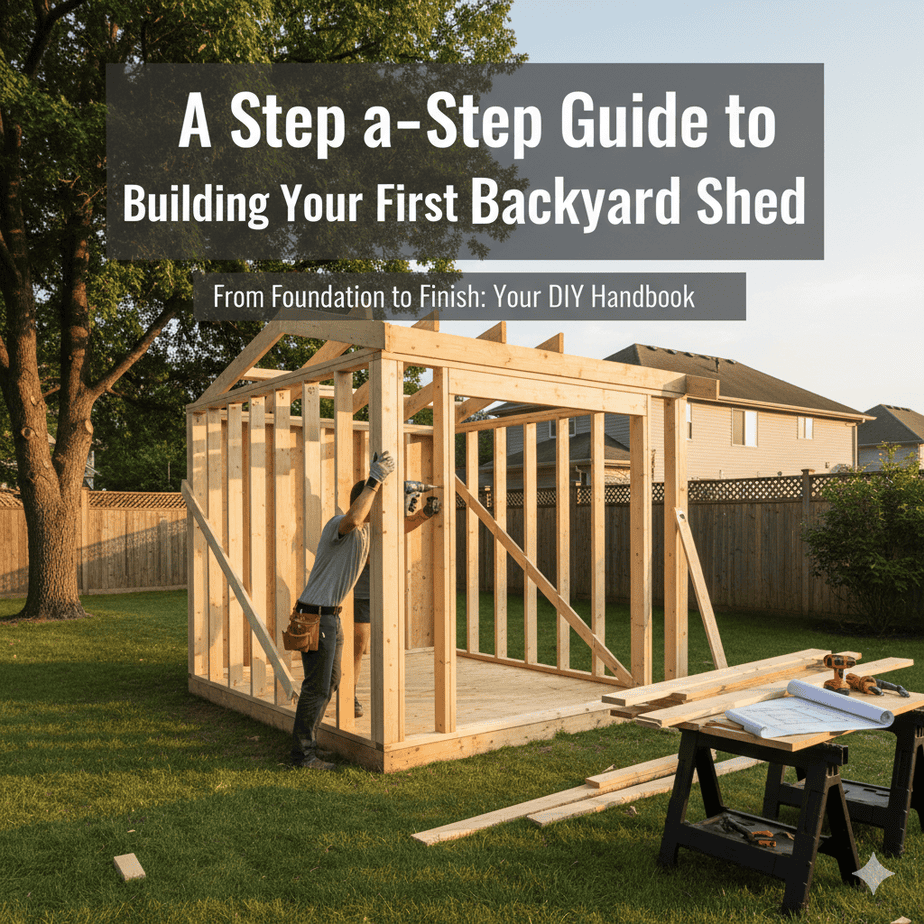
The dream of a tidy, organized backyard often leads to one quintessential DIY project: the backyard shed. It’s a sanctuary for your lawnmower, a home for your tools, a haven for seasonal decorations, and a powerful statement of your self-reliance. For a beginner, the prospect of building one from scratch can feel daunting, conjuring images of complex blueprints and unfamiliar power tools. But fear not. With careful planning, patience, and this step-by-step guide, you can transform a pile of lumber into a sturdy, functional, and proud addition to your property.
This guide is designed for the novice. We will walk through the entire process, from the first glimmer of an idea to the final turn of the door handle. We will demystify the terminology, break down the tasks into manageable chunks, and emphasize the key principles that separate a wobbly shack from a shed that will stand the test of time. So, put on your work gloves, and let’s begin this rewarding journey.

The 20 Steps From Start to Finish Building a Shed
Quick Navigation Menu
The Crucial Preliminaries – Planning and Preparation
Building and Sheathing the Roof
Closing It In – Siding, Roofing, and Doors
The Crucial Preliminaries – Planning and Preparation
Rushing to the hardware store to buy wood is the most common mistake a beginner can make. Success is forged in the planning stages. This phase is about making informed decisions that will guide every subsequent step.
Step 1: Define Your Purpose and Needs
Before you sketch a single line, ask yourself: What is this shed for?
Basic Storage: For lawnmowers, rakes, and flower pots, a simple 4×6 or 6×8 foot shed might suffice.
Workshop or Hobby Space: If you plan to have a workbench and move around inside, you’ll need more headroom and floor space, perhaps an 8×10 or 10×12 foot structure.
Aesthetic Addition: Do you want it to blend with your house? This will influence the siding, roof style, and paint color.
Consider what you will store and how you will access it. This will determine the door size and the need for windows or shelving. A little foresight here prevents the “I wish I’d built it bigger” regret later.

Step 2: Choose a Location
The location of your shed is not just about convenience; it’s about practicality and legality.
Sunlight and Drainage: Pick a level, well-drained spot. Avoid low-lying areas where water pools. A bit of sunlight can help prevent moisture buildup and mildew.
Access: Ensure you can easily get large items in and out. Don’t tuck it into a corner where maneuvering a wheelbarrow becomes an Olympic sport.
Check Local Regulations: This is critical. Visit your local municipal office or check their website regarding building permits and zoning laws. Many areas have rules about how close a shed can be to property lines (setbacks), maximum size without a permit, and even the required foundation type. Ignoring this step could result in having to dismantle your finished shed—a heartbreaking outcome. Check out this Article What’s the Best Location For an Outdoor Storage Shed? for more information and tips.
Step 3: Design and Gather Materials
Now, let’s get specific. For a beginner, using pre-designed plans is highly recommended. You can find countless free and paid plans online tailored to various skill levels.
Selecting a Plan: Choose a plan with clear drawings, a materials list, and step-by-step instructions. A simple gable roof (the classic triangle shape) is the easiest for a first build.
Check out this Article How Do I Choose the Best Shed Plans? (Paid and Free) if you need some help getting the right Shed Plans.
The Materials List: Your plan will provide a detailed list. This typically includes:
Lumber: For the frame, you’ll use dimensional lumber like 2x4s and 2x6s. For the floor and walls, you’ll need sheets of plywood or oriented strand board (OSB).
Siding: T1-11 plywood is a popular choice as it combines sheathing and siding in one sheet. Alternatively, you can use plywood and then add vinyl, wood, or hardie-plank siding.
Roofing: Roof sheathing (plywood), roofing felt (tar paper), and asphalt shingles are the standard.
Fasteners: A collection of galvanized nails or deck screws (3.5-inch for framing, 2-inch for sheathing), and roofing nails.
Door Hardware: Hinges and a latch.
Concrete: For foundation piers, if you choose that route.
Gather Your Tools: You don’t need a professional workshop, but you do need the basics:
Essential Power Tools: A cordless drill/driver, a circular saw, and a tape measure are non-negotiable. A speed square is invaluable for marking cuts.
Helpful Extras: A level (a 4-foot one is great for this project), a hammer, a ladder, safety glasses, and hearing protection.
Optional but Useful: A miter saw for faster, more accurate cuts and a chalk line for marking long, straight lines.
Check out this Article for more info on tools needed. What Framing Tools are Needed to Build a Shed?
Laying a Solid Foundation
A shed is only as good as its foundation. A poorly built foundation will lead to a sagging, twisting, and rotting structure. We will focus on two beginner-friendly options: concrete pier blocks and a skid foundation.

Step 4: Prepare the Ground
Once your location is marked, you need to create a stable base.
Clear and Level: Remove all grass, rocks, and vegetation from an area slightly larger than your shed’s footprint.
The Importance of Level: This cannot be overstated. Use a long, straight 2×4 and a level to check the ground across the entire area. You will need to dig down high spots and fill in low spots. A level base is the single most important factor in this entire step. Here’s a good Article How To Prepare The Ground For a Storage Shed for more info.
Step 5: Build the Foundation
Option A: Concrete Pier Blocks: These are pre-formed concrete blocks with a recessed top designed to hold a wooden post. They are easy to use and elevate the shed frame off the ground, promoting air circulation and preventing rot.
– Place the blocks according to your shed plans, typically at each corner and spaced evenly along the longer spans (usually 4 to 6 feet apart).
– Use your tape measure and a string line to ensure the blocks are perfectly square and aligned.
– Place a concrete paver or a layer of gravel on top of the soil under each block for better stability and drainage.
Check out this Article Pros and Cons of a Concrete Block Shed Foundation for more info.
Option B: Skid Foundation: This involves using two or three large, pressure-treated 4×4 or 6×6 timbers (the skids) laid directly on the ground.
– Lay the timbers parallel to each other, spaced according to your floor frame design.
– It is crucial to level the timbers with each other. You may need to dig trenches or add gravel to achieve this.
– Pressure-treated wood is mandatory here, as it contacts the ground.
Whichever option you choose, take your time. Double-check that everything is level and square. An error here echoes through the entire build.
Here’s an Article on Building a Skid Foundation How to Build Your Shed Floor on Skids.
Constructing the Floor Frame
The floor is the platform upon which everything else is built. It needs to be strong, flat, and square.
Step 6: Build the Floor Frame (The “Floor Joist Assembly”)
This is essentially a grid of lumber that will support the floor sheathing.
The Perimeter: Construct a rectangular frame using 2×6 lumber (pressure-treated is best for this, even on piers, for extra rot resistance). The outside dimensions of this frame should match your shed’s planned size (e.g., 4×6 feet). Join the corners using a technique called “toe-nailing” (driving screws in at an angle) or, for greater strength, use metal joist hangers.
Check for Square: This is a critical habit to form. Measure the diagonals of your rectangle—from one corner to the opposite corner. If both diagonal measurements are exactly equal, your frame is perfectly square. If not, gently push the corners until they are. A square frame is essential for walls that fit properly.
Add the Joists: These are the internal members that span the width of the frame, providing support for the floor. Install them every 16 inches “on center” (meaning from the center of one joist to the center of the next). Use metal joist hangers to secure them to the perimeter frame for a rock-solid connection.

Step 7: Attach the Floor Sheathing
Position the Frame: Carefully lift your completed floor frame and place it onto your prepared foundation. Ensure it is centered and sitting flat on all the piers or skids.
Install the Decking: Using 3/4-inch thick exterior-grade plywood or tongue-and-groove OSB, cover the entire floor frame.
Stagger the Seams: If you need more than one sheet, ensure the seams do not line up. Stagger them like bricks in a wall for added strength.
Fasten Securely: Attach the plywood to the frame using construction adhesive and 2-inch deck screws every 8 inches along the edges and every 12 inches in the field (the middle of the sheet). The adhesive drastically reduces squeaks and adds rigidity.
You now have a solid, stable, and level platform. Stand on it, walk around, and appreciate your work. This is the first major milestone.
Framing the Walls
Wall framing might look complex, but it’s simply a series of repeating components: a bottom plate, a top plate, and studs in between.
Step 8: Build the Walls Flat on the Deck
It is far easier and safer to build each wall flat on your new floor and then “raise” it into place.
The Components: For each wall, you will need:
Bottom and Top Plates: Two 2x4s cut to the length of the wall.
Studs: Vertical 2x4s spaced 16 or 24 inches on center. The height of these studs determines your wall height (e.g., 7 or 8 feet).
Headers: For any door or window opening, you need a sturdy header (often two 2x6s with a spacer) to carry the load above the opening.
Assemble the Wall: Lay the bottom and top plates on edge on the floor, parallel to each other. Place the studs between them at the marked intervals. For door and window openings, you will add “king studs” on the sides and “cripple studs” above and below. Assemble everything using your drill and 3.5-inch screws.
Check for Square: Just like the floor, ensure the wall frame is square before fully securing it.
Need more help framing the walls? Here’s a great Article How to Frame a Wall the Right Way.
Step 9: Raise and Secure the Walls

This is a two-person job. It’s exciting and physically demonstrates your progress.
Start with the Longest Wall: With a helper, carefully lift the wall and position it so the bottom plate is flush with the edge of the floor. Have your helper hold it plumb (perfectly vertical) while you brace it temporarily with a long 2×4 nailed to the floor and the top of the wall.
Attach to the Floor: Drive 3.5-inch screws through the bottom plate and into the floor frame every 16 inches.
Add the Adjacent Walls: Build, raise, and attach the next wall, ensuring its end is flush with the end of the first wall. Screw the two walls together at the corner.
Continue Until All Walls are Up: Repeat for the remaining walls. The final wall will slot into the open space.
Step 10: Ensure Plumb, Square, and Braced
Once all four walls are up and nailed together at the corners, it’s time to make the structure rigid.
Permanent Bracing: Install plywood or OSB sheathing on the outside of the walls. This “shear panel” is what gives your shed incredible strength against wind and leaning. Start at a corner and work your way around, making sure the sheets are level and the edges land on the center of a stud.
Final Check: Use your level to check that all walls are plumb. Re-measure the diagonals of the shed to ensure the entire box is square before you proceed to the roof.
Building and Sheathing the Roof
The roof protects everything you build from the elements. A gable roof is our focus for its simplicity.
Step 11: Construct the Gable Ends
Gable ends are the triangular walls that fill the space between the side walls at the ends of the shed.
Build a Template: You can build these on the ground. The simplest method is to create a triangular frame that matches the pitch (slope) of your roof. The bottom of the triangle is the width of your shed, and the peak is determined by your chosen roof pitch (a 4/12 pitch is common and manageable).
Install Them: Lift the completed gable ends into place at each end of the shed and secure them to the side walls.

Step 12: Install the Rafters
Rafters are the angled beams that form the skeleton of the roof.
Cutting the Rafters: This is the most technically challenging part of the build. Your shed plans will provide a “bird’s mouth” cut pattern—a notch where the rafter sits on the top plate of the wall. Cut one rafter perfectly, using your speed square to get the angles right, and then use it as a template to mark and cut all the others.
Installation: Place the rafters every 16 or 24 inches on center, attaching them to the top plates of the walls and to the ridge board (a board that runs along the peak of the roof) or directly to the opposing rafter. Toe-nail them securely or use metal rafter ties.
Step 13: Sheathe the Roof
Start from the Bottom: Just like the floor and walls, you will cover the rafters with plywood or OSB sheets. Begin at the bottom edge of the roof (the eave) and work your way up.
Stagger the Seams: Ensure the end joints between sheets are staggered across the roof.
Safety First: Be extremely careful working on the roof. Use roof jacks or a secure ladder, and never work on a wet or windy day.
Closing It In – Siding, Roofing, and Doors
Your shed is now fully framed. This phase is about making it weathertight and functional.
Step 14: Install the Roofing
Drip Edge: Install a metal drip edge along the eaves before any other roofing material.
Roofing Felt: Roll out roofing felt (tar paper) over the entire roof, starting from the bottom and overlapping each row by several inches. Staple it in place.
Shingles: Start at the bottom eave. Install shingles according to the manufacturer’s instructions, ensuring you have the correct overhang and that you stagger the tabs for a waterproof seal. Use roofing nails to secure them. Check out this Article for more help How to Choose the Best Roofing Material for a Shed
Step 15: Install Siding and Trim

Siding: If you are using T1-11 siding, simply cut the sheets to size and nail them directly to the wall studs. Start from a bottom corner and work your way around. If you are using another type of siding, you may need to install it over the wall sheathing.
Trim: Install trim boards around the corners (corner boards) and along the bottom and top of the walls to give your shed a finished, polished look and to seal gaps.
Here’s a couple Articles you might find helpful.
What’s the Easiest Shed Siding to Install?
What is The Cheapest Siding For a Shed?
Step 16: Build and Hang the Door
For a beginner, a simple single door is best.
Frame the Door: Your wall frame should already have the rough opening. Build the door itself as a simple “Z-brace” frame from 2x4s, covered with a sheet of plywood on the outside. Ensure it is built stoutly to avoid sagging.
Hang the Door: This requires precision. Attach the hinges to the door first. Then, with a helper holding the door perfectly positioned in the opening (with even gaps all around), mark and attach the hinges to the door jamb. Install a sturdy latch and handle.
Here’s some helpful Articles about shed doors.
Shed Door Ideas: How to Build Your Own Custom Design
How to Build a Shed Door with Plywood
Should a Shed Door Open In or Out?
How to Choose the Best Shed Door Hinges
The Finishing Touches
You are in the home stretch. These final steps transform the structure into a finished shed.
Step 17: Paint or Stain
Protect your investment and make it look great. Use a high-quality exterior paint or stain on all wood surfaces. Primer is highly recommended for bare wood, especially on the T1-11 siding. Don’t forget the door and trim.
Step 18: Install Windows (Optional)
If your design includes a window, this is the time to install it. Place the window in the rough opening, center it, shim it until it is level and square, and then nail the flange to the sheathing. Seal around the edges with exterior-grade caulk to prevent water leaks. Check out this Article How to Choose the Best Shed Windows
Step 19: Add Ventilation
A small vent or two near the roof peak is crucial. It allows hot air to escape and prevents moisture buildup, which can lead to mold and rot.

Step 20: Organize the Interior
The final, rewarding step. Build simple shelves from 2x4s and plywood. Install hooks on the walls for tools and hoses. Create a storage system that makes sense for how you will use the space.
Building your first backyard shed is more than a weekend project; it is a journey in problem-solving, patience, and practical skill-building. There will be moments of frustration—a cut that’s a little off, a board that refuses to sit perfectly level. But these are the moments that teach you the most. When you step back and look at the finished structure, you are not just looking at a shed. You are looking at a testament to your ability to plan, to learn, and to create something tangible and lasting with your own hands. You have not just built a shed; you have built confidence. Now, go put your tools away—in their new home.
Questions and Answers
Question: What are the first steps to take before building a backyard shed?
Answer: Before starting, you should check your local building codes or homeowners’ association rules for permits and size restrictions. Then, choose a suitable location that’s level, well-drained, and easily accessible.
Question: What materials are commonly used for shed construction?
Answer: Most sheds are built using pressure-treated wood for the frame and floor, plywood or OSB for walls, and asphalt shingles or metal sheets for the roof. Vinyl and resin panels are also popular for low-maintenance options.
Question: How do I prepare the foundation for my shed?
Answer: A solid foundation ensures stability and longevity. Common options include a gravel base, concrete slab, or wooden skid foundation. Level the ground and compact it before laying any materials.
Question: Do I need a building permit for a backyard shed?
Answer: In most areas, you’ll need a permit if the shed exceeds a specific size (often 100–200 sq. ft.) or has electrical wiring. Always verify requirements with your local zoning office before starting construction.
Question: What tools will I need to build a shed from scratch?
Answer: You’ll need a tape measure, circular saw, level, hammer or nail gun, drill, square, shovel, and ladder. Having safety gear like gloves, goggles, and hearing protection is also essential.
Question: How can I design my shed to match my home’s style?
Answer: Use similar siding, trim colors, and roofing materials as your house. Adding windows, shutters, or decorative elements like flower boxes can also help your shed complement your home’s aesthetics.

Question: What’s the best way to weatherproof a shed?
Answer: Apply sealant or exterior paint, use treated wood, and ensure proper roof overhangs and caulking around openings. Installing gutters and vents will help prevent moisture buildup and rot.
Question: How can I make the shed interior more functional?
Answer: Add shelves, pegboards, wall hooks, and workbenches for organization. If you plan to use the shed as a workshop, consider insulation, windows, and power outlets.
Question: How long does it take to build a backyard shed?
Answer: Depending on size and complexity, it usually takes two to three days for a small pre-fab kit or up to a week or more for a custom-built shed.
Question: What’s the average cost of building a backyard shed?
Answer: Costs vary based on materials and size, but most DIY sheds range from $500 to $3,000. Hiring professionals or using premium materials can increase the price to $5,000 or more.