
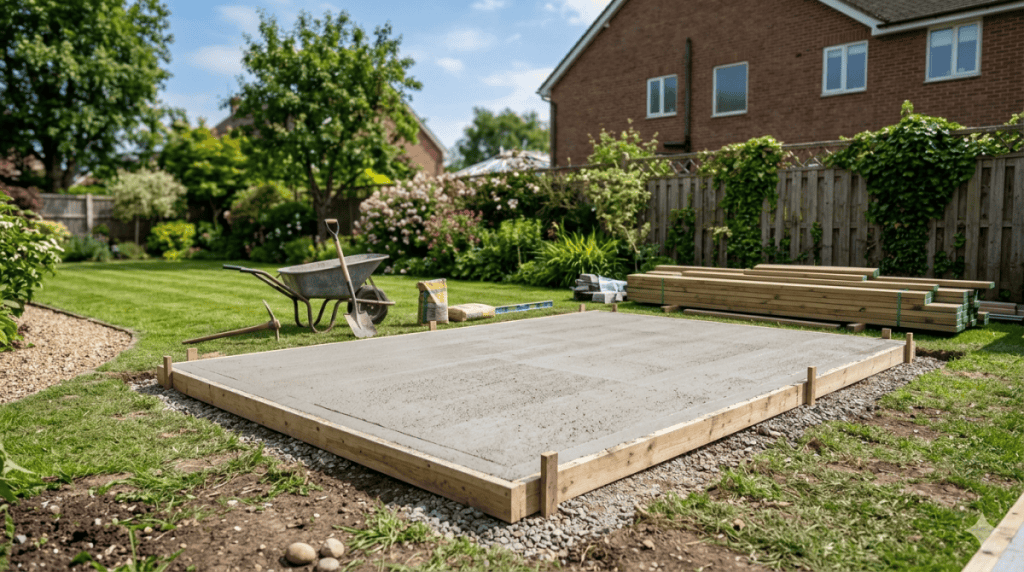
When planning to add a storage shed to your property, the focus is often on the structure itself—the siding, the roof style, the windows. However, experienced builders and savvy homeowners know that the foundation is the true make-or-break component. A shed is only as good as what sits beneath it. While options like gravel pads, concrete piers, or plastic grids offer lower upfront costs, the concrete slab stands as the premium choice. But with premium comes a higher price tag, leading to the central question: should you splurge on a concrete shed foundation?
The answer depends largely on what you plan to store, how long you plan to stay in your home, and your tolerance for maintenance. A concrete slab transforms a simple storage unit into a durable, weather-resistant outbuilding that can handle heavy machinery and last for decades. However, it represents a significant portion of the overall shed cost. To determine if it is the right investment, you must look beyond the initial pour and understand the technical details, lifespan, and long-term value of a concrete base.

Quick Navigation Menu
What is the Lifespan of a Concrete Shed Foundation?
How Thick Should a Shed Concrete Base Be?
Can a Shed Sit Directly on a Concrete Slab?
Should a Concrete Shed Foundation be Bigger Than the Shed?
Does a Concrete Shed Foundation Require Rebar?
Do you Need to Seal Your Concrete Shed Foundation?
Do I Need Gravel Under a Concrete Slab?
What are the Most Common Concrete Shed Foundation Mistakes?
The Pros and Cons of a Concrete Slab Shed Base
Is a Concrete Foundation for a Shed Worth It?
Related Reading
I Want a Shed… Now What? How to Start Without Getting Overwhelmed
How Do I Choose the Best Shed Plans? (Paid and Free)
Choosing a Shed Design That Matches Your Skill Level
Planning a Shed Building Timeline That Won’t Break Your Spirit
Choosing the Right Shed Size for Your Yard Size
Why Did My Cheap Shed Cost So Much? — Budgeting the Right Way
Why Don’t My Shed Walls Line Up?
What is the Lifespan of a Concrete Shed Foundation?
One of the strongest arguments for splurging on concrete is longevity. When asking how much does a shed cost over a lifetime, the foundation dictates the timeline. A well-constructed concrete slab, poured correctly with proper reinforcement and adequate drainage, has a functional lifespan of 50 to 100 years. In many cases, the foundation will outlast the wooden structure built upon it.
This longevity contrasts sharply with alternative foundations. Pressure-treated wooden skids sitting on gravel typically last 15 to 20 years before rot and insect damage compromise the structure. Concrete piers can shift over time due to frost heave, causing the shed floor to become uneven. A concrete slab, however, offers permanent stability.
The lifespan is contingent on proper installation. A slab that cracks excessively due to a lack of reinforcement or one that erodes at the edges due to poor drainage will not reach that half-century mark. But for homeowners looking for a permanent solution—perhaps a shed that doubles as a workshop or a home office—concrete offers a “set it and forget it” durability that justifies the higher initial cost to build a shed foundation compared to temporary alternatives.
How Thick Should a Shed Concrete Base Be?

Thickness is the primary variable that affects the structural integrity of your foundation. When calculating the cost to build a storage shed, the concrete volume (measured in cubic yards) is the most significant material expense. Therefore, thickness directly impacts the budget.
For a standard storage shed used for lawnmowers, gardening tools, and seasonal decorations, a thickness of 4 inches is the industry standard. This is sufficient for most residential applications, provided the ground beneath is well-compacted and the concrete is properly reinforced.
However, if you plan to store heavier items—such as a vehicle, a lathe, a milling machine, or a boat—you should increase the thickness to 5 or 6 inches. Furthermore, the edges of the slab require special attention. The perimeter of the slab bears the most weight and is most susceptible to cracking. A “ thickened edge” or “turn-down” slab, where the edges are poured to a depth of 8 to 12 inches, creates a beam-like structure that resists settling and frost heave. This is essential in colder climates where freeze-thaw cycles can shift the ground. If you are wondering how much does it cost to build a shed with a heavy-duty floor, remember that increasing the thickness from 4 inches to 6 inches adds roughly 50% more concrete to the pour, significantly raising the material cost but ensuring the slab doesn’t crumble under pressure.
Can a Shed Sit Directly on a Concrete Slab?
Yes, a shed can—and should—sit directly on a concrete slab. In fact, a monolithic slab (one solid piece of concrete) serves as both the foundation and the floor. This is one of the primary reasons homeowners choose to splurge on concrete; it eliminates the need for a separate floor framing system.
However, while the shed sits “directly” on the concrete in terms of structural support, there is a critical nuance regarding moisture. If you set wooden walls directly onto the raw concrete, capillary action will wick moisture from the ground up into the wood. Over time, this leads to “dry rot” or termite infestation.

To prevent this, a physical barrier is required. Most professional builders install a sill plate gasket—a foam or rubber barrier—between the concrete and the bottom plate (the “mud sill”) of the shed walls. Alternatively, if the concrete slab is poured with anchor bolts (J-bolts) set into the wet concrete, the wooden framing can be bolted down on top of this barrier. This creates a secure, weather-tight seal. So, while the shed sits on the concrete structurally, it should never sit flush against the concrete without a moisture break.
Should a Concrete Shed Foundation be Bigger Than the Shed?
This is a common point of confusion. Ideally, yes, the concrete foundation should be slightly larger than the footprint of the shed—but not for the reasons most people think.
The shed itself should sit on the interior, flat portion of the slab. However, the slab should extend beyond the walls by 2 to 4 inches to create a “lip” or “apron.” This overhang serves a vital purpose: water management. When rain hits the roof and drips off the eaves, it falls to the ground. If the shed walls are flush with the edge of the slab, the water lands directly on the soil next to the foundation, potentially eroding the base and splashing mud onto the siding.
By extending the slab beyond the walls, you create a drip edge. Water hits this concrete apron and flows away from the structure. Furthermore, if you are pouring a “monolithic slab” (where the floor and footings are one piece), the thickened edge usually extends outward slightly to support the weight of the walls. Ensuring the slab is larger than the shed footprint is a hallmark of a high-quality installation that protects your investment, though it does add to the overall shed cost due to the extra square footage of concrete.
Does a Concrete Shed Foundation Require Rebar?

If you want the foundation to last for the 50 to 100-year lifespan mentioned earlier, the answer is unequivocally yes. Rebar (reinforcing steel bar) is the skeleton of the concrete slab. Concrete is exceptionally strong in compression (pushing down) but notoriously weak in tension (pulling apart). As the ground settles unevenly or as heavy loads shift, the slab experiences tensile stress. Without rebar, the slab will crack and separate.
For a 4-inch slab, a grid of 3/8-inch (10mm) or 1/2-inch (12mm) rebar placed 24 inches apart on center is standard. The rebar should be held in the middle of the slab—not lying on the ground—using “dobies” or rebar chairs. Additionally, wire mesh (WWF) is sometimes used as a cheaper alternative, but for a true splurge-worthy foundation, rebar is superior.
In areas prone to frost heave or poor soil conditions, the rebar should tie the thickened edges into the main field of the slab. Skipping rebar might save a few hundred dollars upfront, but it dramatically increases the risk of uneven settling and structural cracks. When calculating how much does it cost to build a shed with a high-quality foundation, rebar is a non-negotiable line item that ensures the structure remains level and square for generations.
Do you Need to Seal Your Concrete Shed Foundation?
Concrete is porous. Even though it looks solid, it contains microscopic capillaries that allow water vapor and liquid moisture to migrate through the slab. If you are storing metal tools, lawn equipment, or sensitive items, this moisture can cause rust and corrosion. Additionally, in colder climates, water that seeps into the concrete can freeze, expand, and cause spalling (surface flaking).
Therefore, sealing your concrete shed foundation is highly recommended, though not strictly mandatory for structural integrity. There are two main types of sealers:
- Penetrating Sealers: These soak into the concrete and chemically react to block moisture absorption. They do not change the look of the concrete and are excellent for preventing freeze-thaw damage.
- Film-Forming Sealers (Epoxy or Acrylic): These create a glossy, protective layer on top of the concrete. They are ideal for workshops because they make spills easy to clean and prevent oil stains from soaking in.
Applying a high-quality sealer 28 days after the concrete is poured (once it has fully cured) adds minimal cost compared to the overall project but significantly extends the aesthetic life and dryness of the shed interior.
Do I Need Gravel Under a Concrete Slab?

Absolutely. Gravel is not an optional addition; it is a critical component of a successful concrete foundation. A 4- to 6-inch layer of compacted gravel (usually 3/4-inch crushed stone or Class 5 base) serves three essential purposes:
- Drainage: Gravel acts as a capillary break. It prevents groundwater from rising up through the soil and saturating the underside of the concrete slab. This reduces moisture vapor transmission into the shed.
- Stability: Concrete poured directly over dirt or clay will eventually crack as the organic material decomposes or shifts. Gravel provides a stable, non-organic base that resists settling.
- Frost Protection: In freezing climates, gravel allows water to drain away from the slab, reducing the risk of frost heave (where ice lenses form under the concrete and push it upward).
Skipping the gravel base is a classic false economy. While it adds to the cost to build a storage shed foundation upfront, pouring concrete directly on soil is a recipe for disaster, guaranteeing cracks and uneven floors within a few years.
What are the Most Common Concrete Shed Foundation Mistakes?
Even if you decide to splurge on a concrete foundation, mistakes during installation can negate the benefits. Awareness of these pitfalls is essential whether you are hiring a contractor or tackling a DIY project.
- Poor Site Preparation
The most common mistake is failing to compact the soil and gravel. If you pour concrete over loose fill, the weight of the shed will cause the ground to settle, leaving the slab unsupported and prone to cracking. Proper compaction with a plate compactor is essential. - Ignoring the Frost Line
In northern climates, shallow slabs without thickened edges or proper footings will heave during winter. If your area experiences deep freezes, a simple 4-inch slab will act like a raft, floating and cracking as the ground moves. A turn-down edge extending below the frost line is required for permanent structures. - Inadequate Reinforcement
As discussed, skipping rebar or wire mesh leads to uncontrolled cracking. Some DIYers lay rebar directly on the ground, which does nothing to reinforce the slab because it sits at the bottom rather than the middle where tension is highest. - Improper Drainage
Pouring a slab at the bottom of a slope or failing to grade the surrounding soil away from the concrete creates a bathtub effect where water pools under or around the shed. The slab should be the highest point in the immediate area, with gutters installed on the shed to direct rainwater away. - Forgetting Anchor Bolts
If you pour a beautiful slab but forget to embed anchor bolts (J-bolts) into the wet concrete, securing the shed becomes difficult. Drilling into cured concrete to install expansion anchors is possible but less secure and more labor-intensive than having bolts ready to accept the wooden sill plates.
The Pros and Cons of a Concrete Slab Shed Base

To answer the titular question—whether you should splurge—we must weigh the advantages against the disadvantages in detail. While the longevity is appealing, the upfront financial commitment is substantial. Understanding how this choice affects the shed cost and the usability of the shed will help you make the final decision.
The Pros
- Unmatched Durability and Strength
Concrete is the strongest common foundation material available. It can support virtually any load you place inside the shed, from a compact tractor to a classic car. Unlike wood floors that may sag over time, concrete remains rigid. This strength translates to security; a shed on a concrete slab is significantly harder to break into than one sitting on skids or blocks, as there is no way to easily pry the structure open from underneath. - Long-Term Value and Property Appeal
When considering how much does it cost to build a shed, it is helpful to view it as a home improvement project. A concrete foundation elevates the shed from a temporary structure to a permanent outbuilding. If you ever sell your home, a shed with a proper concrete base is considered an asset, similar to a garage. It signals to potential buyers that the structure is low-maintenance and built to last, often recouping a significant portion of the initial investment. - Pest and Moisture Resistance
One of the biggest headaches for shed owners is dealing with rodents, snakes, and insects that burrow under a raised wooden floor. A concrete slab eliminates the crawlspace entirely, sealing the shed off from ground-dwelling pests. Furthermore, because concrete does not rot, it eliminates the risk of structural failure due to ground contact, which plagues wooden skid foundations after a decade of rain and snow. - Usability and Aesthetics
A concrete floor is smooth, level, and easy to work on. If you intend to use the shed as a workshop, mechanic’s bay, or hobby space, concrete is vastly superior to wood. Rolling tool chests, jacks, and wheeled equipment glide easily. Spills—whether oil, paint, or gasoline—can be wiped up or cleaned with solvents without damaging the floor. Aesthetically, a concrete slab with a finished edge gives the shed a “built-in” look that is far more polished than a gravel pad.
The Cons
- Higher Upfront Cost
This is the most significant barrier. The cost to build a storage shedfoundation in concrete is typically 2 to 4 times higher than a gravel base. Depending on your location and the size of the shed, a concrete slab can cost between $4 and $10 per square foot, not including site preparation. For a 12×20 shed, you could be looking at $1,500 to $4,000 just for the foundation. When calculating how much does it cost to build a shedentirely, the concrete foundation often represents 20% to 30% of the total project budget. - Permanent Location
Once a concrete slab is poured, it is permanent. You cannot easily move the shed later if you decide to reconfigure your yard. Furthermore, if you ever remove the shed, you are left with a large concrete pad that must be broken up and hauled away, which is an expensive demolition project. Gravel or skid foundations offer flexibility; you can tow the shed to a new spot if your landscaping needs change. - Cracking and Maintenance
While concrete is durable, it is not invincible. All concrete cracks; it is simply a matter of controlling whereit cracks (using control joints) and preventing structuralfailure. Even with perfect installation, hairline cracks are inevitable. While these rarely affect structural integrity, they can be visually unappealing. Additionally, if you skip sealing, the concrete can stain easily and may spall in freeze-thaw cycles. - Labor and Complexity
Concrete work is physically demanding and requires specific expertise. Unlike gravel, which a homeowner can easily spread and level, a proper concrete slab requires form building, rebar tying, grading, and a rapid pour. If you are hiring a contractor, the labor costs are high. If you are doing it yourself, the risk of error (such as a weak mix, poor finishing, or improper curing) is significant.
Is a Concrete Foundation for a Shed Worth It?
To make the final determination, you must look at the total shed cost in context. A basic 10×12 storage shed on a gravel pad might cost $3,000 total. The same shed on a concrete slab might cost $5,000 total. If you only need to store a few trash cans and a lawnmower for five years, the gravel option is financially prudent.
However, if you are building a 12×20 workshop with heavy equipment, or if you live in a region with high termite pressure and wet soil, the concrete slab is not a splurge; it is a necessity. When you ask how much does it cost to build a shed that will last 50 years, the concrete slab is actually the most cost-effective option per year of service. It transforms a vulnerable structure into a fortress.
Conclusion
Splurging on a concrete shed foundation is an investment in permanence, security, and peace of mind. It eliminates the maintenance headaches of rot, pests, and shifting that plague lesser foundations. While the initial cost to build a shed with a concrete base is undeniably higher than alternative methods, the longevity—often exceeding 50 years—and the enhanced usability make it the superior choice for homeowners who view their shed as a long-term asset rather than a temporary storage solution.
If you are building a small shed for light storage in a mild climate, you might save money elsewhere. But if you value durability, plan to use the space for heavy equipment or hobbies, and want a structure that adds real value to your property, the concrete slab is worth every penny. By ensuring proper thickness (4-6 inches), using rebar, installing a gravel base, and avoiding common mistakes like poor drainage, you ensure that your splurge today pays dividends in structural integrity for decades to come.