
For many homeowners, the backyard shed is an indispensable space—a sanctuary for tools, a workshop for projects, or simply a well-organized solution for lawn and garden clutter. Yet, when the time comes to build or buy one, a familiar dilemma arises: the tug-of-war between cost and longevity. The prevailing assumption is that a durable shed requires a significant financial investment, often pushing affordable options into the category of “temporary structures” destined to rot, rust, or warp within a few seasons.
This, however, is a false economy. The true cost of a shed isn’t just its initial price tag; it’s the years of service it provides without demanding constant repair or replacement. The good news is that durability and affordability are not mutually exclusive. By making smart, informed choices about materials, you can construct a shed that stands the test of time without collapsing your budget. The secret lies not in finding a single magical cheap material, but in understanding how to use a combination of affordable, purpose-driven products to create a resilient whole.

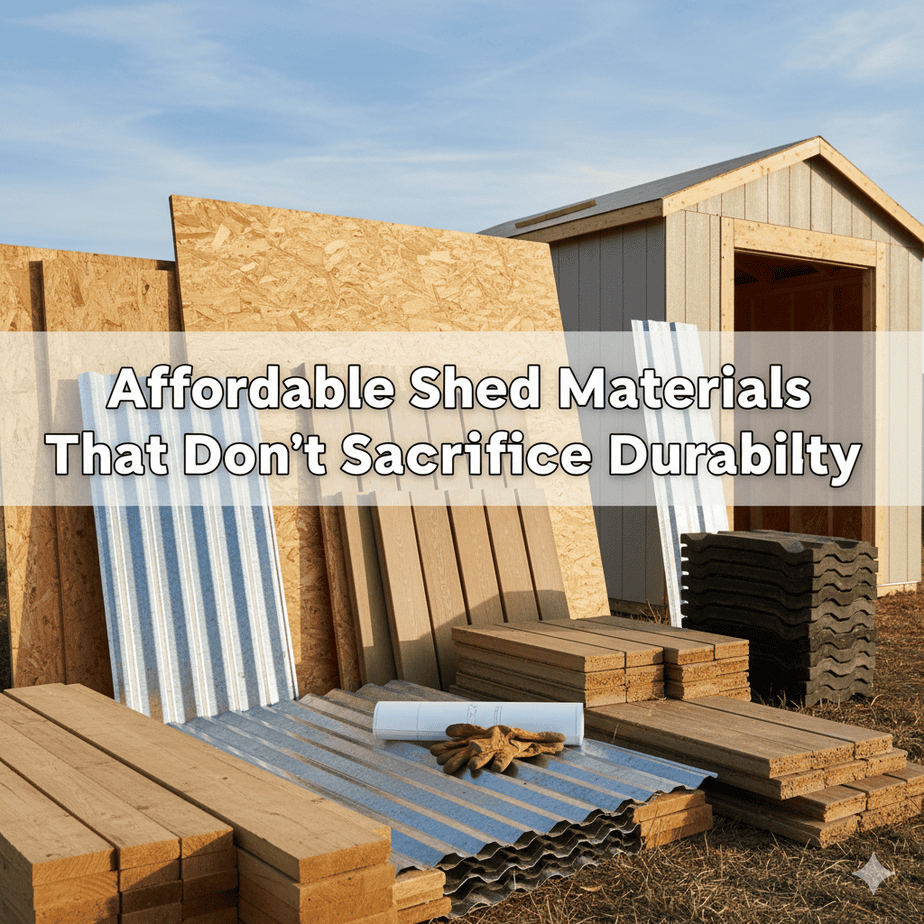
Affordable Shed Materials That Don’t Sacrifice Durability
Quick Navigation Menu
The Foundation: Durability Starts from the Ground Up
The Floor: Building a Solid Base
Wall Framing: The Strong and Inexpensive Backbone
Siding: The Protective Shell on a Budget
Roofing: Keeping the Elements at Bay
The Finishing Touch: Protection is Key
The Foundation: Durability Starts from the Ground Up
Before a single wall is raised, the most critical decision for your shed’s longevity is its foundation. A shed placed directly on the ground is vulnerable to moisture, insect infestation, and shifting soil, which will compromise even the most expensive walls and roof. A proper, affordable foundation is non-negotiable for durability.
Gravel Pad with Timber Skids: One of the most cost-effective and robust foundation systems for a small to medium-sized shed is a gravel pad with pressure-treated timber skids. This method involves leveling the ground, laying a weed barrier, and creating a 4- to 6-inch deep bed of compacted crushed stone or gravel. Onto this, you place heavy-duty, ground-contact rated pressure-treated lumber (like 4x4s or 6x6s) as skids.
The gravel provides excellent drainage, preventing water from pooling under the shed, while the elevated skids keep the floor frame away from ground moisture. This system is not only inexpensive but also forgiving, allowing for minor ground shifts without distorting the shed’s structure. It’s a prime example of an affordable solution that directly targets the primary enemies of durability: moisture and rot.

Concrete Pavers: For an even simpler solution for lighter sheds, concrete pavers placed on a leveled sand and gravel base can be highly effective. They create stable, permanent points of contact that lift the shed frame off the damp earth. Ensuring they are perfectly level is key to preventing structural stress. Not sure check out this article for 9 options. What’s The Best Shed Foundation Option For You?
The Floor: Building a Solid Base
A sagging or rotting floor renders a shed useless. The best affordable and durable floor is a pressure-treated wood frame with a plywood deck.
Construct a frame of pressure-treated 2x4s or 2x6s (depending on the span) on 16-inch centers. Cover this with 3/4-inch exterior grade plywood, which is strong enough to hold heavy equipment without sagging. The pressure-treated lumber resists moisture from the foundation below, while the plywood, especially if painted with a durable porch and floor enamel, withstands foot traffic and the occasional dropped tool. This combination creates a floor that is both cost-effective and built to last. Get more info here Is Pressure Treated Plywood Best for a Shed Floor?
Wall Framing: The Strong and Inexpensive Backbone
The skeleton of your shed—the frame—must be strong and straight. Here, the most affordable and appropriate choice remains standard kiln-dried spruce or pine lumber, typically 2x4s. While not inherently rot-resistant, its strength-to-cost ratio is unparalleled for framing. The durability of this wood frame is entirely dependent on protecting it from the elements, which is the job of the siding and roof.
For those in humid climates or who want extra insurance, using pressure-treated lumber for the bottom plate—the piece of framing that sits directly on the floor platform—is a brilliant, low-cost upgrade. This single step guards against wicking moisture from the foundation, effectively stopping rot before it can climb the walls.
Siding: The Protective Shell on a Budget
The siding is your shed’s first line of defense against rain, sun, and wind. Fortunately, there are several affordable options that offer impressive durability.
Oriented Strand Board (OSB) with Smart Cladding: On its own, OSB is a very affordable sheet material, but it is not durable when exposed to weather. However, when used as sheathing beneath a protective layer, it becomes part of a highly resilient system. The key is to never leave OSB exposed. Cover it with building paper (tar paper) or a modern house wrap, which acts as a breathable rain screen, and then clad it with a durable, affordable siding.
T1-11 Plywood Siding: This is a fantastic all-in-one option for the budget-conscious builder. T1-11 is engineered plywood with integral grooves, designed to serve as both sheathing and siding. While plain plywood would quickly delaminate, T1-11 is made with weather-resistant adhesives. When properly primed and painted on all sides and edges (a crucial step), T1-11 can last for decades. It provides a rustic, classic shed look and saves on labor and materials by combining two steps into one.

Metal Siding: Often overlooked for residential sheds, corrugated galvanized steel or ribbed aluminum panels are incredibly durable and affordable. They are impervious to rot, insects, and won’t warp or crack. Modern coatings resist rust, and their installation is fast, reducing labor time. While the initial material cost might be slightly higher than T1-11, its near-zero maintenance requirement and exceptional lifespan make it a top contender for cost-effective durability. It can be attached directly over purlins (horizontal beams) or over a basic OSB sheathing.
Vinyl Siding: If you can source contractor-grade or surplus vinyl siding, it can be a very economical choice. Vinyl won’t rot, peel, or need painting, and it stands up well to the elements. Its main vulnerability is impact from heavy hail or flying debris, but for a typical backyard setting, it offers a maintenance-free life at a low cost. Check out this article for choosing the cheapest and long lasting siding for a shed. What is The Cheapest Siding For a Shed?
Roofing: Keeping the Elements at Bay
A leaky roof will destroy a shed from the inside out. Therefore, investing in a reliable roofing system is paramount, and it doesn’t have to be expensive.
Metal Roofing: Mirroring its use for siding, corrugated metal roofing is a champion of durability. It sheds water and snow effortlessly, is fireproof, and can last 40 years or more. Compared to asphalt shingles, it may have a higher upfront cost, but its longevity means you’ll never have to replace it. For the DIYer, panels are easy to handle and install, often requiring only simple screws with neoprene washers to create a watertight seal.
Asphalt Roll Roofing: This is arguably the most budget-friendly waterproof roofing solution available. It’s a large roll of asphalt-impregnated material with a mineral granule surface. For a simple shed roof with a low slope, it is perfectly adequate. Installation involves rolling it out over the roof sheathing and nailing or torching it down (depending on the type). While it may not have the aesthetic appeal of shingles or the longevity of metal, a properly installed roll roof can provide 10-20 years of reliable service for a very small investment.
Asphalt Shingles: The most common residential roofing material can also be used on sheds. While three-tab asphalt shingles are a step up in cost from roll roofing, they are still an affordable option, especially if you buy a few extra bundles from a leftover lot. They offer a more finished look and a typical lifespan of 15-25 years.
Still undecided? Get more info here. How to Choose the Best Roofing Material for a Shed
Doors and Hardware
A shed is only as strong as its weakest point, which is often the door or the hardware. Skimping here can lead to security issues, warping, and water infiltration.
For the door itself, building a simple ledged and braced door from solid, dry lumber is a very durable and affordable alternative to a flimsy pre-hung unit. The diagonal brace transfers weight effectively, preventing the door from sagging over time. Sealing it with a good quality exterior paint or stain on all six sides is essential. Interested in building your own shed door? Check out this article Shed Door Ideas: How to Build Your Own Custom Design
The hardware—hinges and a latch—are where a small investment pays huge dividends. Choose heavy-duty, galvanized or coated strap hinges and a robust, weather-resistant latch. Cheap, lightweight hinges will bend, and a feeble latch will fail, compromising both security and function. Spending an extra $20-$30 on high-quality hardware is one of the smartest durability upgrades you can make.

The Finishing Touch: Protection is Key
No discussion of affordable durability is complete without emphasizing the importance of finish. A $50 gallon of premium exterior paint or a solid-color stain can add 10-15 years to the life of a wood shed. This finish protects against UV radiation, which breaks down wood fibers and causes fading, and it seals the material from moisture.
Pay special attention to edges, end grains, and the underside of the bottom board, as these are the most vulnerable spots for water absorption. A well-applied finish is the final, crucial step that ties all your affordable material choices together into a cohesive, long-lasting structure.
.Building a durable shed on a budget is not about finding a single cheap, miracle material. It is a strategic exercise in layering and purpose. It’s about using a gravel foundation to manage water, a pressure-treated bottom plate to block rot, a metal roof to ensure decades of weatherproofing, and a quality coat of paint to seal the deal.
By understanding the specific role of each component and selecting materials that perform that role effectively without unnecessary expense, you can break free from the cost-versus-durability paradox. The result is a shed that is both kind to your wallet today and steadfastly reliable for all the tomorrows to come—a true testament to the power of smart, affordable building.
Related Reading
A Step-by-Step Guide to Building Your First Backyard Shed
DIY Shed Budgeting: Where to Save and Where to Splurge
How Much Does It Really Cost to Build a Backyard Shed?
Questions and Answers
Question: What does “affordable materials that don’t sacrifice shed durability” mean?
Answer: It refers to cost-effective building materials that provide strong, long-lasting performance without requiring a high budget. These materials balance price and durability.
Question: What are some budget-friendly but durable materials for shed construction?
Answer: Materials like pressure-treated lumber, galvanized steel panels, composite roofing shingles, and engineered wood (such as LP SmartSide) offer durability at lower costs.
Question: Why is pressure-treated wood considered affordable and durable for sheds?
Answer: Pressure-treated wood resists rot, insects, and moisture damage while remaining cheaper than premium hardwoods, making it ideal for shed framing and flooring.
Question: Can metal siding be both affordable and long-lasting?
Answer: Yes. Galvanized or coated steel siding is relatively inexpensive, requires minimal maintenance, and can last decades without warping or rotting.

Question: Is engineered wood a good compromise between price and durability?
Answer: Absolutely. Engineered wood products are designed to resist decay, impact, and weathering while staying more affordable than natural cedar or redwood.
Question: What roofing materials offer durability without high cost?
Answer: Asphalt shingles and corrugated metal panels are common choices—they’re economical, weather-resistant, and easy to install.
Question: How can I ensure my shed remains durable even with affordable materials?
Answer: Use proper sealing, painting, and weatherproofing; ensure good ventilation; elevate the shed base; and perform regular inspections for moisture or pests.
Question: Are plastic or resin shed materials considered durable and affordable?
Answer: Yes. High-density polyethylene (HDPE) or resin panels are cost-effective, rust-free, rot-proof, and require little maintenance, making them a popular choice for budget-friendly sheds.