
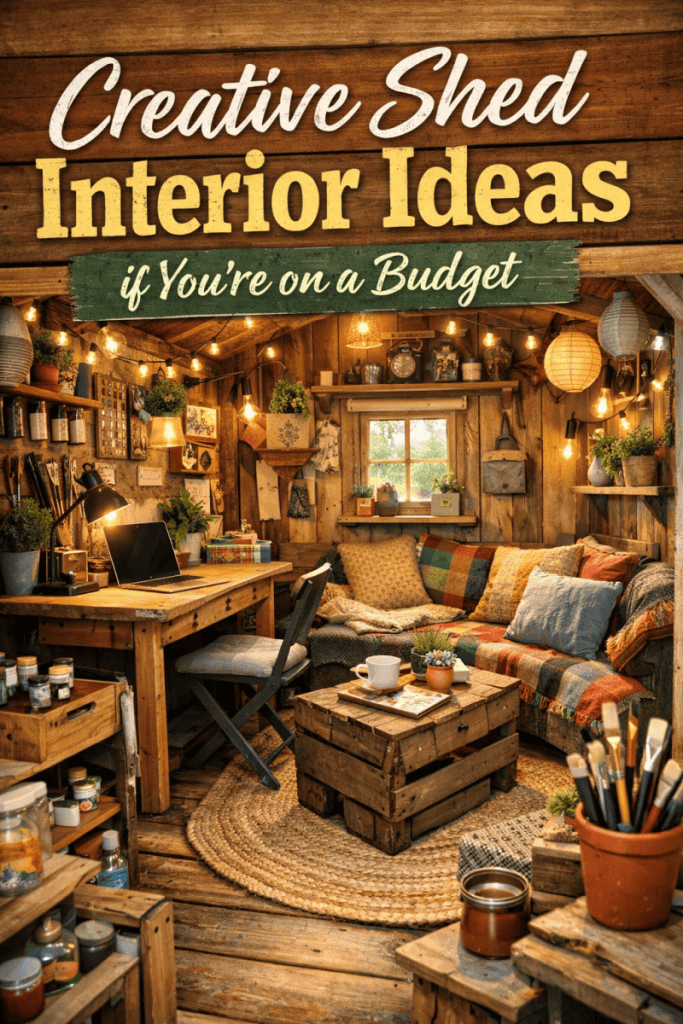
Building a shed is a practical way to add usable space to your property, but the real transformation happens inside. Many people focus on how to build a shed structurally and stop there, leaving the interior unfinished or underutilized. With thoughtful planning and budget-conscious choices, your shed can become a highly functional, creative, and comfortable extension of your home.
Whether you’re exploring how to build a storage shed, upgrading an existing structure, or asking how can I build a shed that feels intentional and inviting, this guide breaks down exactly how to do it step by step and budget by budget.

10 Creative Shed Interior Ideas for the Budget Minded
Quick Navigation Menu
1] Start With a Clear Purpose for Your Shed
2] Use Paint Strategically to Transform the Space
3] Maximize Vertical Space with DIY Storage
4] Repurpose Old Furniture for Character and Savings
5] Create Zones Instead of Clutter
6] Improve Lighting Without Expensive Electrical Work
7] Add Warmth with Budget Flooring Options
8] Personalize With DIY Decor and Wall Art
9] Insulate and Weatherproof on a Budget
10] Keep It Flexible for Future Uses
1] Start With a Clear Purpose for Your Shed
Before decorating or furnishing, defining your shed’s purpose is the most important decision you’ll make after building a shed.
Storage-focused sheds: If your goal is learning how to build a storage shed, the interior should emphasize efficiency and accessibility. Shelving, wall-mounted racks, and labeled bins should take priority over furniture. Keeping items visible and organized prevents wasted space and makes seasonal tools or supplies easier to access.
Work or hobby sheds: For workshops, craft rooms, or DIY spaces, layout matters more than appearance. Flat work surfaces, sturdy tables, accessible tools, and durable flooring should guide your design choices. Planning these needs early while learning how to build a shed prevents expensive changes later.
Creative or relaxation sheds: When building a shed for writing, art, yoga, or relaxation, the focus should be on comfort and atmosphere. Minimal furniture, soft textures, and calming colors help create a space that encourages creativity and focus.

Why purpose saves money: A clearly defined purpose prevents impulse purchases and unnecessary furniture. Every item in the shed should support its function, ensuring your budget is spent wisely.
2] Use Paint Strategically to Transform the Space
Paint is one of the most cost-effective upgrades you can make after building a shed, especially if the interior walls are unfinished plywood or OSB.
Light colors for small sheds: White, cream, and pale gray reflect light and make small sheds feel larger and brighter, which is especially helpful in shaded yards or sheds with few windows.
Accent walls for personality: Painting one wall instead of the entire shed adds character while keeping paint costs low. Accent walls work well behind desks, shelving, or seating areas.
Floor and ceiling paint: Porch or garage paint protects plywood floors and improves durability. Painting ceilings a light color helps distribute light evenly throughout the shed, especially in storage sheds used frequently.
Using leftover paint: Leftover paint from home projects is ideal for sheds. Since perfect color matching isn’t necessary, similar tones can be combined for a cohesive look.
3] Maximize Vertical Space with DIY Storage

Vertical storage is essential when floor space is limited, particularly when planning how to build a shed efficiently.
Pegboards for flexibility: Pegboards allow hooks and accessories to be rearranged as needs change, making them perfect for evolving sheds or multipurpose spaces.
DIY shelves from scrap wood: Simple shelf brackets paired with leftover lumber create strong, affordable storage. Installing shelves during the build a shed phase saves time and reduces wall damage later.
Wall-mounted hooks: Hooks keep bulky items like ladders, hoses, and bags off the floor, instantly making the shed feel more open and accessible.
Stackable crates and bins: Uniform crates and bins create a clean visual appearance and make labeling easier, especially in sheds designed mainly for storage.
4] Repurpose Old Furniture for Character and Savings
Furnishing a shed doesn’t require buying new pieces. Repurposing furniture is one of the easiest ways to save money after building a shed.
Old desks as workstations: Desks from your home or thrift stores work well for offices, craft areas, or planning spaces. A little sanding and paint can give them new life.
Dressers as storage cabinets: Dressers offer drawer-based organization that’s ideal for tools, hardware, or craft supplies. Labeling drawers increases efficiency.
Bookshelves for vertical organization: Bookshelves are great for bins, jars, and display items. Securing them to shed walls adds stability and safety.
Dining tables as workbenches: Solid dining tables make durable workbenches, especially for DIY, gardening, or repair sheds.
5] Create Zones Instead of Clutter
Zoning helps prevent clutter and improves functionality when learning how to build a shed that truly works.
Work zones: These areas house desks, benches, or tools used most frequently, improving efficiency and reducing setup time.
Storage zones: Storage zones contain shelves, cabinets, and bins, keeping supplies organized and separate from active work areas.
Relaxation zones: Even a small chair or bench provides a mental break and adds comfort, especially in creative or office sheds.
How zones save money: Clear zones prevent over furnishing and help identify items that don’t serve the shed’s purpose.
6] Improve Lighting Without Expensive Electrical Work

Lighting plays a major role in how usable your shed feels, especially in the evenings.
Solar-powered lighting: Solar lights are ideal if electricity wasn’t added during how to build a shed. They’re easy to install and energy-efficient.
Battery-powered LED lights: LED lights work well for shelves, corners, and storage areas and are inexpensive to maintain.
String lights for ambiance: String lights add warmth and soften unfinished ceilings, making sheds feel more inviting.
Task lighting: Clamp lamps and desk lamps provide focused light for detailed work, making them essential in workshops or offices.
7] Add Warmth with Budget Flooring Options
Flooring greatly affects comfort, especially in sheds built on concrete or raised joists.
Indoor-outdoor rugs: These rugs are durable, affordable, and weather-resistant, and they help define zones within the shed.
Peel-and-stick vinyl planks: Vinyl planks offer a finished look without professional installation and work well on stable subfloors.
Painted floors: Painted plywood floors are cost-effective and long-lasting when properly sealed.
Foam floor tiles: Foam tiles reduce fatigue and insulate against cold floors, making them ideal for workspaces.
8] Personalize With DIY Decor and Wall Art
Decor transforms a shed from functional to enjoyable.
Framed fabric or wallpaper samples: These add color and texture at a very low cost and are easy to update.
Pegboard art layouts: Arranging tools or supplies thoughtfully can double as decor.
Handmade signs: Quotes, labels, or wood signs add personality without spending money.
Cork boards: Cork boards display inspiration, plans, and reminders while contributing to the shed’s visual appeal.
9] Insulate and Weatherproof on a Budget

Comfort upgrades allow you to use your shed more often throughout the year.
Foam board insulation: Foam panels are affordable and easy to install, especially when shed framing is exposed.
Weather stripping: Sealing doors and windows prevents drafts, moisture, and heat loss.
Curtains and fabric panels: Heavy fabrics help insulate walls and soften hard surfaces.
Rugs for insulation: Rugs reduce heat loss through floors and improve comfort.
10] Keep It Flexible for Future Uses
Flexibility ensures your shed remains useful as your needs change.
Fold-down desks: These save space and allow the shed to serve multiple functions.
Modular shelving: Adjustable shelving prevents expensive rebuilds as storage needs evolve.
Stackable furniture: Stackable stools or bins allow quick layout changes.
Neutral colors: Neutral paint colors adapt easily to new uses without repainting.
Final Thoughts
Knowing how to build a shed is only the first step. Thoughtful interior planning determines whether your shed becomes a forgotten storage space or a valuable everyday retreat. By using vertical storage, repurposed materials, smart lighting, and flexible design, you can build a shed that works hard without overspending.

Related Reading
I Want a Shed… Now What? How to Start Without Getting Overwhelmed
How Do I Choose the Best Shed Plans? (Paid and Free)
Choosing a Shed Design That Matches Your Skill Level
Planning a Shed Building Timeline That Won’t Break Your Spirit
Choosing the Right Shed Size for Your Yard Size
Questions and Answers
Question: How can I build a shed on a tight budget?
Answer: You can build a shed on a tight budget by keeping the design simple, using standard dimensions, and choosing affordable materials like plywood and pressure-treated lumber. Reusing leftover materials, buying second-hand tools, and doing the labor yourself can significantly reduce costs. Planning the interior layout early also prevents wasted spending after the shed is built.
Question: What is the cheapest way to build a storage shed?
Answer: The cheapest way to build a storage shed is to construct a basic rectangular shed with a simple roof design and minimal windows. Using a gravel base instead of concrete, purchasing materials in bulk, and focusing on DIY construction can keep costs low. Inside, open shelving and wall-mounted storage are more affordable than cabinets.
Question: Do I need to finish the interior after building a shed?
Answer: Finishing the interior is not required, but it greatly improves usability. Even simple upgrades like painting the walls, sealing the floor, and adding basic lighting can make a shed more comfortable and functional. If you’re learning how to build a shed for regular use, interior finishing should be part of the plan.
Question: How do I design a shed interior before I build it?
Answer: To design a shed interior before construction, decide how the shed will be used and plan around that purpose. Mark where shelves, desks, or workbenches will go and consider window and door placement for light and access. This approach helps you build a shed that supports your needs without costly changes later.

Question: What size shed works best for interior projects?
Answer: The best shed size depends on how you plan to use it. Smaller sheds work well for storage or single-purpose spaces, while larger sheds are better for workshops or offices. When thinking about how can I build a shed that feels comfortable inside, prioritize layout and vertical storage over square footage alone.
Question: Can I insulate a shed cheaply?
Answer: Yes, you can insulate a shed cheaply using foam board insulation, weather stripping, rugs, and fabric panels. These materials are affordable and easy to install. Even partial insulation can make a noticeable difference in temperature and comfort, especially in sheds used during colder months.
Question: How do I add lighting if my shed has no electricity?
Answer: If your shed doesn’t have electricity, solar-powered lights, battery-operated LED lights, and rechargeable lamps are excellent options. These solutions are inexpensive and easy to install, making them ideal when building a shed without running electrical wiring.
Question: What flooring works best for a budget shed interior?
Answer: Painted plywood, peel-and-stick vinyl planks, foam tiles, and indoor-outdoor rugs all work well for budget shed interiors. The best option depends on how the shed will be used. Storage sheds benefit from durable painted floors, while workspaces and creative sheds benefit from warmer, cushioned flooring.
Question: How can I keep my shed interior organized long-term?
Answer: Long-term organization starts with zoning the interior into work, storage, and relaxation areas. Using vertical storage, labeled bins, and modular shelving helps the shed adapt as your needs change. When building a shed, flexibility is key to avoiding clutter over time.
Question: Is it better to build a shed first or plan the interior first?
Answer: It’s always better to plan the interior before or during construction. Knowing how you’ll use the space influences window placement, wall support for shelving, and overall layout. Planning early ensures you build a shed that works efficiently and avoids unnecessary expenses later.